
Home inspection • buying guide
Best Thermal Camera for Water Leaks: Find the Clue, Then Confirm It
Compare three thermal cameras for tracing suspected leaks, learn what the image can reveal, and see why a moisture meter still matters.
The TOPDON TC002C Duo is our most practical pick for occasional leak investigations because its 256 × 192 detector can scan a useful area and the connected phone makes it easy to save and share evidence. For repeated property work, choose the standalone TOPDON TC004. The smaller TC004 Mini is convenient, but its 128 × 128 detector gives you less spatial detail for tracing a narrow or faint pattern.
None of these cameras detects water directly. Thermal imaging can reveal an unusual surface temperature caused by evaporation, heat transfer, or a recently used pipe. Insulation gaps, airflow, sunlight, and HVAC equipment can create similar patterns. A moisture meter or further inspection must confirm the finding.
The best options for leak tracing
| Pick | Best for | Why it fits | Limitation |
|---|---|---|---|
| TOPDON TC002C Duo | Homeowners and occasional checks | 256 × 192 native detector; phone-based capture and sharing | Requires a compatible USB-C host and app |
| TOPDON TC004 | Repeated inspections | Dedicated display, controls, storage, and 256 × 192 detector | Larger and heavier than a phone module |
| TOPDON TC004 Mini | Compact standalone use | Dedicated 2.4-inch display and long claimed runtime | Lower 128 × 128 native resolution |
Best for occasional investigations: TOPDON TC002C Duo
The TC002C Duo is a 30g module that connects to compatible iOS, Android, or Windows USB-C devices. Its 256 × 192 native detector, 25Hz refresh rate, and stated sensitivity below 40mK are a credible foundation for looking for relative differences across a ceiling, wall, or floor.
The phone workflow is especially useful for leak work: you can capture the pattern, add a conventional photo for context, and share both with a plumber or building professional. TOPDON’s app also supports point, line, and area measurement tools. Those numbers still describe surface temperature, not moisture content.
Confirm host compatibility before buying. The camera takes power from the connected device, and the app, port, phone battery, and operating system all become part of the tool.
Best for repeated property checks: TOPDON TC004
The upgraded TC004 is the better fit when a thermal camera will be used across multiple rooms, properties, or maintenance rounds. It has a 3.5-inch display, physical controls, 64GB of internal storage, and the same 256 × 192 native resolution as the TC002C Duo. You do not need to surrender your phone while scanning or worry about an exposed connector at every stop.
Be careful when shopping: older and upgraded TC004 units share the name. Look for the 3.5-inch screen, 64GB storage, and Wi-Fi on the exact listing. The linked review includes the full old-versus-new check.
Best compact standalone option: TOPDON TC004 Mini
The TC004 Mini is easy to carry and does not depend on a phone. TOPDON lists a 2.4-inch display, 25Hz refresh rate, and up to 15 hours of runtime. Its 128 × 128 native detector is the compromise: it records fewer temperature samples and may make a small anomaly harder to separate from its surroundings.
It is reasonable for checking an obvious patch, following a broad pipe route, or keeping a dedicated camera in a maintenance kit. Choose one of the 256 × 192 options when you routinely need finer outlines or more defensible documentation.
What a leak looks like in thermal imaging
There is no universal “water color.” The palette maps warmer and cooler readings within the selected span. A wet area may appear cooler because evaporation removes heat, but it can also appear warmer depending on the water source, building materials, and surrounding conditions. The shape, location, and change over time are more useful than the color alone.
FLIR’s leak-detection guidance recommends controlling the displayed level and span so a small difference is visible, then confirming the suspected moisture. It also warns that environmental conditions matter. A dramatic image created with an extremely narrow range is still only a clue.
Thermal cameras cannot see through drywall. They read infrared energy from the visible surface. A hidden pipe or wet material may influence that surface enough to form a pattern, but the camera is not producing a picture of the cavity. If a safe opening already exists, a borescope can provide a direct but narrow view that still needs moisture testing and source confirmation.
A four-step search-and-confirm workflow
- Start with conventional evidence. Note staining, odor, peeling paint, a water-meter change, a fixture problem, or the timing of rain and appliance use.
- Scan comparatively. Check the suspected area and similar unaffected surfaces. Capture wider context before moving closer.
- Test the anomaly. Use a suitable pin or pinless moisture meter and compare with a known dry area of the same material.
- Trace the source safely. The coolest or warmest point is not always the leak origin; water can travel along framing, pipes, and membranes.
Pin meters measure electrical resistance between probes and can provide material-specific readings, but they leave small holes. Pinless meters scan non-destructively and are useful for comparison, yet their readings are relative and metal behind the surface can interfere. The right choice depends on the material and whether minor surface damage is acceptable.
Our wood-moisture-meter guide compares suitable pin and pinless formats and explains where each reading can mislead you.
Conditions that can fool the camera
- Recent sun can leave exterior walls and roofs with persistent thermal patterns.
- Supply air, open windows, and insulation gaps can resemble moisture-related cooling.
- Hot- or cold-water pipes can remain visible after use even when they are not leaking.
- Reflective metal can show the temperature of reflected surroundings rather than the object.
- A surface may be wet without enough temperature contrast to stand out.
Repeat the scan after conditions change when the answer matters. A pattern that follows rain, a shower, or appliance use is more informative than one unexplained frame, but it still needs confirmation.
When to stop scanning and call someone
Active water near electrical equipment, a bulging ceiling, contaminated water, substantial mold growth, or suspected structural damage deserves immediate professional attention. Shut off the water supply when safe and appropriate. Do not cut into a surface until hidden wiring, plumbing, and other hazards have been considered.
If you are planning for the next leak rather than tracing current damage, our automatic water-shutoff guide compares flow-aware valves, point-sensor systems, and monitor-only alternatives.
For a clearer explanation of the confirming tools, read thermal camera vs. moisture meter. If you also want to inspect insulation, HVAC, and electrical patterns, our home-inspection thermal-camera guide compares the same formats more broadly.
Models discussed
Use these as starting points for checking fit. We do not publish a price or claim hands-on testing.
| Model | Format | Best fit | Trade-off |
|---|---|---|---|
| TOPDON TC002C Duo USB-C Thermal Camera | USB-C thermal attachment | Buyers with a compatible host device | Depends on phone or tablet and app |
| TOPDON TC004 3.5-inch Thermal Imaging Camera | Standalone thermal camera | Repeated room-by-room inspection | A separate device to carry and charge |
| TOPDON TC004 Mini Thermal Imaging Camera | Compact standalone thermal camera | A smaller self-contained kit | Lower native detector detail than TC004 |
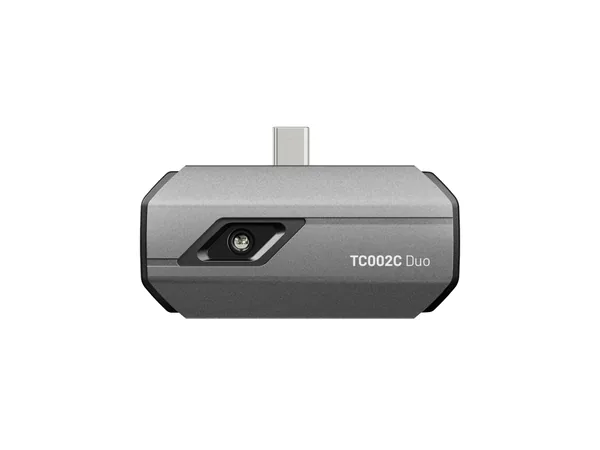
Product reference
TOPDON TC002C Duo USB-C Thermal Camera
Best for: Buyers with a compatible host device
Trade-off: Depends on phone or tablet and app
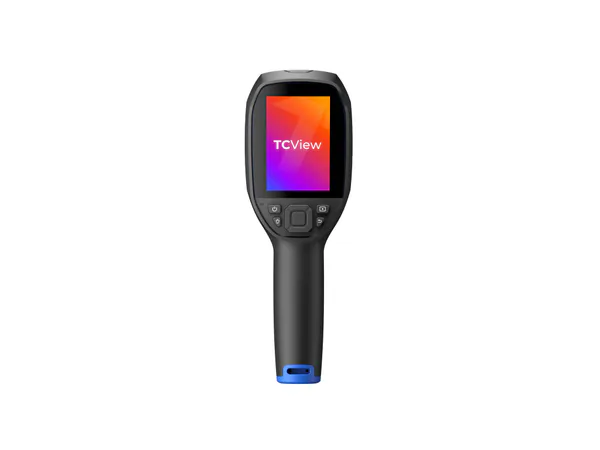
Product reference
TOPDON TC004 3.5-inch Thermal Imaging Camera
Best for: Repeated room-by-room inspection
Trade-off: A separate device to carry and charge
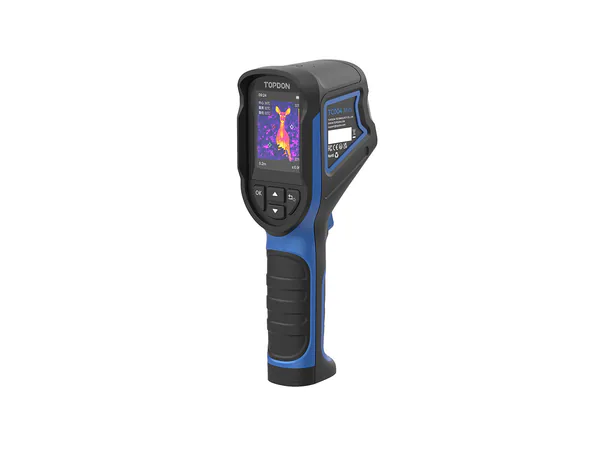
Product reference
TOPDON TC004 Mini Thermal Imaging Camera
Best for: A smaller self-contained kit
Trade-off: Lower native detector detail than TC004
How this guide was researched
We compare documented product features against the job each buyer needs done. We have not physically tested these products. Check current specifications and availability with the manufacturer or merchant.
Affiliate disclosure: If you buy through a qualifying link, we may earn a commission at no extra cost to you.