
Leak protection • buying guide
Best Automatic Water Shutoff Systems: Stop a Leak Before It Spreads
Compare inline, retrofit, and monitor-only leak systems by detection coverage, installation, offline behavior, and the ability to stop water.
A leak alert is useful. A closed valve is what limits how much water can keep escaping while nobody is home. The difficult part is choosing a system that can detect the failures you care about, fits the plumbing you already have, and still behaves sensibly when power or internet access disappears.
The three products here take fundamentally different approaches. Moen’s Flo Shutoff goes into the main line and watches flow and pressure. YoLink’s Bulldog kit turns an existing ball valve when one of its point sensors gets wet. Flume 2 straps to a compatible water meter and watches usage without cutting pipe—but it cannot shut the water off by itself.
This is a source-based comparison. Focused Gadgets has not installed or physically tested these systems. Automatic protection reduces risk; it does not guarantee that every leak will be detected or that water damage will be prevented.
Quick answer
- Choose the Moen Flo Shutoff for broad, flow-aware protection. Model 900-001 is a 3/4-inch inline monitor and motorized shutoff that tracks the main supply, runs pressure-loss tests, and can close the valve after it learns the home’s normal usage. It needs a suitable installation point, continuous power, Wi-Fi, and usually a plumber.
- Choose the YoLink Bulldog starter kit for a retrofit around a compatible ball valve. The ASIN supplied for this guide includes the Valve Controller 2, Bulldog operator, hub, and three point leak sensors. Correctly configured device-to-device pairing can trigger a shutoff without internet service, but only a sensor that gets wet can report the leak.
- Choose Flume 2 when monitoring matters more than automatic action. It straps to a compatible water meter, avoids pipe cutting, and sends abnormal-usage alerts. Flume explicitly states that the device does not close the water, so someone—or a separately integrated valve—must respond.
| System | How it detects trouble | Can it close the main supply? | Installation reality | Main limitation |
|---|---|---|---|---|
| Moen Flo Shutoff 900-001 | Main-line flow, pressure, temperature, and pressure-loss testing | Yes | Cut into a compatible 3/4-inch main line; nearby continuous power and Wi-Fi required | Automatic protection is inactive during its learning period |
| YoLink Valve Controller 2 + Bulldog kit | Water touching one of three point sensors | Yes | Clamp the operator over a suitable working ball valve; install hub and place sensors | A leak outside sensor coverage may go unnoticed |
| Flume 2 F2000 | Magnetic activity at a compatible water meter, interpreted as usage | No | Strap-on meter sensor plus an indoor bridge | Alerts do not stop the leak |
First decide what should trigger the shutoff
“Whole-home leak protection” can describe two very different detection strategies.
A flow-aware system watches water moving through the main supply. It can notice continuous or unusual use even when the leak never reaches a floor sensor. That broader view also creates ambiguity: a garden hose, long shower, irrigation cycle, or visiting family can resemble a problem until the system understands the household or an override is configured.
A point-sensor system waits for water to bridge contacts at a chosen location. Its trigger is easier to understand—water reached the sensor—but its coverage is literal. A sensor beneath the washing machine says nothing about a pipe leaking inside the wall across the room.
Neither method makes inspection unnecessary. A shutoff can limit incoming water, but it cannot remove water already stored in a water heater, drain a failed appliance, repair a pipe, or diagnose the source. If you are investigating an existing stain rather than building an automatic response, our water-leak thermal-camera guide explains the separate search-and-confirm workflow.
Moen Flo Shutoff: best for flow-aware automatic protection
The Amazon ASIN in this guide resolves to Moen model 900-001, the 3/4-inch Flo Shutoff. It is installed inline on the cold-water main so its pressure, flow, and temperature sensors can watch water entering the home. The motorized valve can be operated from the device or app and can close automatically when the system identifies abnormal usage.
Flo’s distinctive feature is its MicroLeak Test. The valve briefly closes to isolate the home, then watches for pressure loss. Moen says the automatic test normally runs daily, cancels if someone uses water, and can identify very small pressure changes. That is useful for slow plumbing losses that may never reach a point sensor.
The trade-off is dependence on installation and learning. Moen’s current support material says Learning Mode typically lasts 14 to 28 days. Usage monitoring continues, and the valve can still be controlled manually, but unusual-usage alerts and automatic shutoff protection are unavailable until the baseline is complete. Changes such as new irrigation or a different occupancy pattern can also require the behavior to be revisited.
This is not a casual screw-on gadget. The installation guide places it after the meter, manual shutoff, and pressure-reducing valve, but before branches that should be monitored. It requires a continuously powered outlet within the specified cable reach, internet connectivity, clearance, and a main line that matches the model. Moen recommends professional installation by a licensed plumber. The free app covers core monitoring and control; the separately offered FloProtect plan adds benefits rather than making basic operation mandatory.
Choose Flo when hidden or distributed leaks matter and an inline installation is acceptable. Skip it if your 3/4-inch line, pressure, power location, network, or plumbing layout fails the pre-installation checks.
YoLink Bulldog kit: best retrofit for known risk points
The YoLink bundle linked here combines a Valve Controller 2 (YS5003), Bulldog Valve Robot, YoLink hub, and three Water Leak Sensor 1 units. Instead of replacing a section of pipe, the Bulldog clamps around the home’s existing quarter-turn ball valve and moves its handle.
That retrofit design can avoid cutting the main line. YoLink lists 1/2-, 3/4-, and 1-inch ball valves as the recommended sizes for the standard Bulldog arrangement, and the valve must already move freely. Alignment, clearance, pipe support, and handle geometry still matter. A stiff, corroded, gate-style, or poorly positioned valve is not rescued by adding a motor.
The three sensors should go where water is most likely to appear early: beside a water heater, under a washing machine connection, near a sump or utility sink, or below a frequently used fixture. More sensors can expand coverage, but the system remains location-based. A leak must reach a paired sensor before that sensor can order the valve closed.
YoLink’s strongest resilience feature is Control-D2D pairing. When the leak sensors and controller are configured for direct device-to-device operation, the manufacturer says they can perform the paired shutoff without internet access or the app, provided the devices remain powered and within range. The hub and internet are still required for full app functionality, remote control, notifications, and device-health reporting. The Valve Controller 2 can run from four AA batteries and can also use AC power with battery backup.
There is an insurance caveat. YoLink warns that a bolt-on operator may not satisfy a carrier that specifically requires an installed automatic shutoff valve. Ask the insurer what certification, installation record, valve type, and monitoring proof it accepts before buying equipment for policy compliance.
Choose the Bulldog kit when you have a compatible, healthy ball valve and want direct point sensors with a retrofit shutoff. Skip it when you need continuous flow analytics, cannot place sensors near the likely failures, or need an insurer-approved inline valve.
Flume 2: best monitor-only alternative
ASIN B08DX6MP8X is the Flume 2 F2000, not an automatic shutoff valve. That distinction is important enough to keep it out of the two shutoff recommendations while still including it as a useful alternative.
Flume’s battery-powered sensor straps to a compatible residential water meter and reads the magnetic field created as the meter records flow. It sends data by radio to an indoor bridge, which connects to Wi-Fi and the Flume cloud. The app reports usage and can notify the owner about abnormal or continuous flow. No pipe cutting is required, and Flume says many owners can complete installation themselves after confirming meter compatibility.
The appeal is low-disruption visibility. It can monitor indoor and outdoor usage passing through the meter and can reveal running toilets, irrigation problems, or taps left open. It is also useful for people who want consumption data but are not ready to alter the plumbing.
The limitation is decisive: Flume’s own help center says Flume 2 will notify the user but will not shut off the water. Its sensor also depends on a compatible meter, and the bridge depends on power, Wi-Fi, and cloud communication for alerts. Flume lists a YoLink shutoff integration, but that is a multi-product system whose compatibility and automation should be confirmed separately; the Flume package alone is monitoring only.
Choose Flume 2 when easy installation and whole-meter usage insight are the priorities. Do not choose it as the sole answer to a requirement for automatic water shutoff.
What happens when power or internet fails?
Failure behavior is more important than a long app feature list.
- Moen Flo: the installation requires continuous electrical power and internet connectivity. Moen’s installation material describes a local mode when the powered device loses internet, but buyers should not assume normal cloud-based behavior or notifications during an outage. A battery-backup accessory is separate.
- YoLink Bulldog: battery operation avoids dependence on a nearby outlet, and properly paired Control-D2D sensors can command the controller without internet. App alerts, remote access, and health reporting still depend on the hub and connectivity.
- Flume 2: the meter sensor has its own battery, but the indoor bridge and cloud path are required to deliver data and alerts. It cannot close the valve in any state.
Whatever you install, practice the manual fallback. Every adult who may need to respond should know where the main shutoff is, how it moves, and whom to call. Exercise and test the system on the manufacturer’s schedule, replace batteries before they become a warning, and confirm that each sensor produces the intended valve action—not merely an app notification.
Match the system to the failure you fear
Choose Moen Flo for a primary residence, rental, or second home where broad main-line monitoring justifies plumbing work and where power and network service are dependable. It is the strongest fit here for detecting unusual flow beyond a few sensor locations.
Choose YoLink Bulldog when the existing ball valve is suitable and the biggest risks are known: a water heater, laundry hookup, sump area, dishwasher, or plumbing cabinet. Its direct pairing is attractive where internet outages should not prevent a wet sensor from closing the valve.
Choose Flume 2 when the goal is to learn about water use and receive leak alerts without cutting pipe. It makes more sense as a monitoring layer—or as part of a separately verified integration—than as an automatic damage-limitation device.
Choose none of them until you have checked pipe or valve compatibility, installation clearance, power and radio conditions, local plumbing rules, and any insurance wording. Prices and bundles change, so confirm the current package contents and specifications at the merchant and manufacturer before ordering.
Frequently asked questions
Does an automatic water shutoff detect every leak?
No. Flow-aware systems can miss or misclassify events, while point sensors only react where water reaches them. A shutoff also cannot stop water already downstream of the valve or coming from a source outside the monitored supply.
Can I install a smart shutoff myself?
A bolt-on operator such as the Bulldog may be a reasonable DIY project when the valve is compatible, accessible, supported, and easy to turn. An inline device such as the Moen Flo requires the main supply to be cut and reconnected; Moen recommends a licensed plumber. Follow local codes and the product instructions.
Will the system work without Wi-Fi?
It depends on the architecture. YoLink documents offline device-to-device shutoff when compatible sensors and the controller are correctly paired and powered. Moen and Flume depend more heavily on networked services for normal monitoring and alerts. Test the exact behavior you expect rather than assuming “smart” means autonomous.
Is Flume 2 an automatic shutoff?
No. Flume 2 monitors a compatible water meter and sends alerts, but the manufacturer states that it does not close the water. A separate compatible valve and correctly configured integration would be required for automatic action.
Where should point leak sensors go?
Prioritize places where supply water could escape and reach the sensor quickly: water heaters, washing machines, dishwashers, refrigerator lines, sinks, toilets, sump equipment, and vulnerable mechanical rooms. Avoid hiding a sensor where it cannot be inspected, tested, or heard.
Can a smart shutoff replace leak investigation?
No. It limits flow; it does not identify the failed pipe, remove standing water, or confirm that materials are dry. Our cordless transfer-pump guide covers compatible pumps for removing suitable liquids, while the thermal camera versus moisture meter guide and wood-moisture-meter guide explain how to investigate wet materials afterward.
Models discussed
Use these as starting points for checking fit. We do not publish a price or claim hands-on testing.
| Model | Format | Best fit | Trade-off |
|---|---|---|---|
| Moen Flo Smart Water Monitor and Shutoff 900-001 | Inline flow monitor and shutoff | Broad flow-aware whole-home protection | Needs plumbing, continuous power, Wi-Fi, and a learning period |
| YoLink Valve Controller 2 and Bulldog Starter Kit | Retrofit valve robot with point sensors | Known leak risks and a compatible existing ball valve | Only detects water that reaches a placed sensor |
| Flume 2 Smart Home Water Monitor | Strap-on meter monitor; no shutoff | Non-invasive usage monitoring and leak alerts | Cannot stop the water without a separate valve integration |
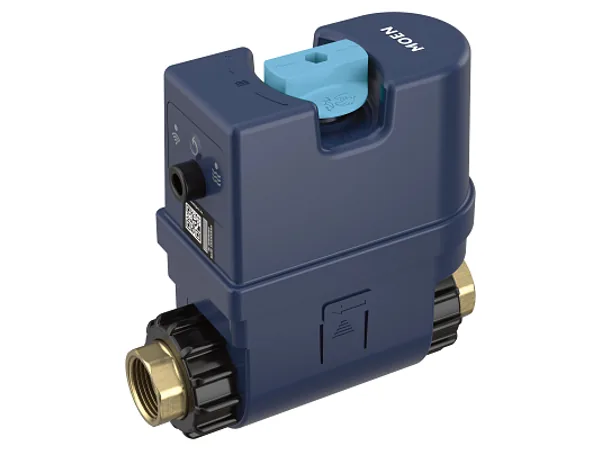
Product reference
Moen Flo Smart Water Monitor and Shutoff 900-001
Best for: Broad flow-aware whole-home protection
Trade-off: Needs plumbing, continuous power, Wi-Fi, and a learning period
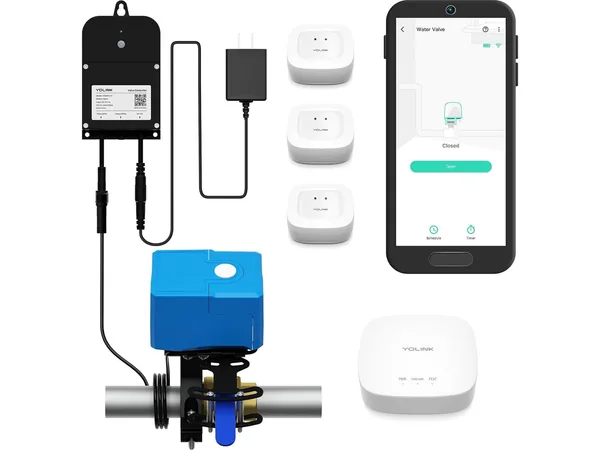
Product reference
YoLink Valve Controller 2 and Bulldog Starter Kit
Best for: Known leak risks and a compatible existing ball valve
Trade-off: Only detects water that reaches a placed sensor
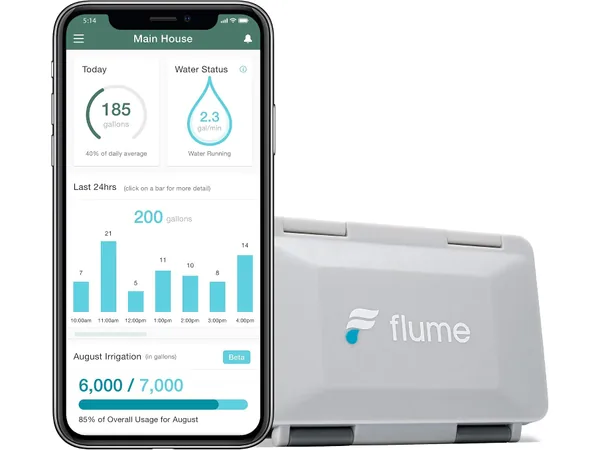
Product reference
Flume 2 Smart Home Water Monitor
Best for: Non-invasive usage monitoring and leak alerts
Trade-off: Cannot stop the water without a separate valve integration
How this guide was researched
We compare documented product features against the job each buyer needs done. We have not physically tested these products. Check current specifications and availability with the manufacturer or merchant.
Affiliate disclosure: If you buy through a qualifying link, we may earn a commission at no extra cost to you.