
Fluid transfer • buying guide
Best Cordless Transfer Pumps: Match the Pump to the Liquid
Compare Milwaukee and DEWALT cordless transfer pumps by fluid compatibility, flow, lift, hose setup, battery platform, and operating limits.
A transfer pump can save a lot of lifting, spilling, and improvised siphoning. It can also become the wrong tool in a hurry when its seals, impeller, motor, or electrical system are exposed to a liquid they were never designed to handle. The label transfer pump describes a job, not universal fluid compatibility.
For documented water work, the choice here is fairly clean. The DEWALT DCE050B has the stronger published performance envelope and can also handle a specified water/propylene-glycol mixture. The Milwaukee 2771-20 is the simpler choice for clear-water jobs when you already own M18 batteries. Neither is a fuel pump. For transferring gasoline or diesel from portable containers, the Lavendex FP001 is the only model here sold for that job, but its evidence is limited to the exact retail listing rather than a manufacturer-hosted manual.
Focused Gadgets has not physically tested these pumps. This guide is based on the exact retail listings, current manufacturer pages, and operator manuals. Published flow, lift, head, and per-charge figures are manufacturer ratings under stated conditions, not our measurements. Hose length, hose diameter, elevation, restrictions, temperature, debris, battery condition, and inlet sealing will change real output.
Quick answer
- Choose the DEWALT DCE050B for the broader verified water-service envelope. It is rated for clear water and up to a 60% water/40% propylene-glycol mixture, with a published maximum flow of 10 GPM using tap water. Its removable impeller window and IPX4-rated battery well also suit repeated plumbing and HVAC service.
- Choose the Milwaukee 2771-20 for straightforward clear-water transfer in the M18 ecosystem. It is rated up to 8 GPM, 18 feet of lift, and 75 feet of head, and its manual makes the intended use unusually explicit: clear water only.
- Consider the Lavendex FP001 only for portable-container fuel transfer when its limited documentation is acceptable. The exact listing names gasoline, diesel, and water, with two speeds, a claimed 3.2 GPM maximum, a built-in 4000mAh battery, auto-stop sensor, digital charge display, and 60-inch hose. No manufacturer-hosted manual or independently traceable certification was found.
- Do not use the Milwaukee or DEWALT for gasoline, diesel, kerosene, or fuel oil. Both manuals prohibit flammable liquids. None of the three is documented for potable water, sewage, salt water, or abrasive slurry.
- Do not buy by GPM alone. Suction lift, discharge height, hose resistance, debris, and battery ownership can matter more than a best-case flow number.
| Buying question | Milwaukee 2771-20 | DEWALT DCE050B | Lavendex FP001 |
|---|---|---|---|
| Documented liquids | Clear water only | Clear water; up to 60% water/40% propylene glycol | Listing names gasoline, diesel, and water |
| Published maximum flow | 8 GPM | 10 GPM with tap water | Listing claims 3.2 GPM on high speed |
| Transfer format | Hose-to-hose utility pump | Hose-to-hose utility pump | Container-mounted stick pump with dispensing hose |
| Hose setup | 3/4-in garden-hose fittings via adapters | 3/4-in garden-hose-thread female fittings | 60-in discharge hose; source-container adapters |
| Power | Milwaukee M18 battery | DEWALT 20V MAX or FLEXVOLT battery | Built-in 4000mAh battery; USB-C charging |
| Automatic protection | Stops when water movement ends; manual still limits dry running | Dry-run shutoff; manual still prohibits dry running | Seller claims auto-stop, dry-run, overcharge, overcurrent, and overload protection |
| Best fit | Clear-water service for an existing M18 owner | Higher-flow water and approved glycol-mixture work | Occasional portable-can refueling without a separate tool battery |
| Main limitation | Narrow fluid specification and lower stated flow | Larger bare tool; flammable-liquid use prohibited | No manufacturer-hosted manual, no written warranty, and seller-supplied performance claims |
Fluid compatibility is the first filter
Pump materials do not react the same way to water, glycol, petroleum fuels, solvents, salt, sediment, or heat. A liquid can swell seals, soften a hose, attack an impeller, remove lubrication, create static or vapor hazards, or contaminate the next load. A pump that moves clean water successfully is not thereby safe for diesel or gasoline.
That distinction is especially important with battery tools. Both verified pumps use electric motors, and both manuals exclude flammable liquids and explosive atmospheres. Owner anecdotes about moving fuel do not supersede those warnings. If a listing headline, marketplace keyword, or forum post conflicts with the operator manual, follow the manual.
Potable water is another separate category. None of these pumps is presented as a food- or drinking-water system. Materials, lubricants, hoses, prior use, and sanitation all matter. A pump suitable for draining a water heater is not automatically suitable for filling a drinking-water tank.
Start every purchase with four questions:
- Does the current manual name the exact liquid or mixture?
- Does it permit the liquid temperature and surrounding atmosphere?
- Are the inlet hose, outlet hose, seals, adapters, and receiving container compatible too?
- Can the pump be cleaned and stored without contaminating a future job?
If any answer is missing, the flow-rate comparison can wait.
Milwaukee 2771-20: best for clear water in the M18 system
Milwaukee describes the 2771-20 as a self-priming water-transfer pump. Its published maximums are 8 GPM, 18 feet of lift, and 75 feet of head. The manufacturer also says an XC5.0 battery can move up to 240 gallons per charge. Those numbers describe different parts of the pump’s operating envelope; they should not be read as a promise that it will deliver 8 GPM through a 75-foot rise.
The strongest reason to choose it is not a single specification. It is a clear job definition combined with a mature battery platform. For an M18 owner draining water heaters, moving clean water between tanks, or handling indoor service calls without a nearby outlet, the tool avoids another battery and charger purchase.
The manual sets firm boundaries. It says clear water only, with a maximum water temperature of 140 degrees Fahrenheit. It excludes salt water, brine, laundry discharge, caustic chemicals, foreign material, sand, particulate, large debris, potable water, and flammable liquids. It also calls for indoor use, a dry pump location, secured hoses, and continuous supervision.
Those exclusions narrow the product more than marketplace copy often suggests. This is not a pond-cleanout pump, sewage pump, chemical pump, fuel pump, or submersible pump. The pump body stays dry while an inlet hose reaches the water. If the source contains scale or debris, use an appropriate strainer and reconsider whether a clear-water impeller pump is the right format.
What the Milwaukee does well on paper
- The fluid specification is simple and difficult to misread.
- Self-priming reduces setup compared with pumps that require the housing to be filled manually.
- Automatic shutoff helps limit damage when flow stops, although the operator still needs to supervise the pump and turn it off promptly.
- Replaceable service parts and published documentation make long-term ownership easier to evaluate.
- Existing M18 batteries can make the total purchase more sensible than the tool-only price suggests.
Where it is the weaker choice
The stated 8 GPM flow and 18-foot lift trail DEWALT’s published tap-water figures. It also lacks DEWALT’s documented approval for a water/propylene-glycol mixture. If HVAC-loop service is part of the job, that difference decides the comparison before battery preference does.
DEWALT DCE050B: best for water and documented glycol mixtures
The DCE050B is DEWALT’s bare-tool version of the DCE050 transfer pump. DEWALT rates it up to 10 GPM using tap water, up to 25 feet of lift based on inlet pressure, and an average 4.5 GPM at 45 feet of head. The manufacturer also states that it can move up to 300 gallons of tap water per charge with a DCB205 battery under its test conditions.
Its important advantage is application scope. DEWALT explicitly permits clear water and a mixture containing up to 60% water and 40% propylene glycol. That makes it the more credible option for compatible HVAC and refrigeration workflows. The wording matters: it does not grant blanket approval for every coolant, antifreeze, glycol type, concentration, additive package, or contaminated service fluid.
The removable impeller window is useful for inspection, clearing permitted debris, and impeller replacement. An enclosed IPX4-rated battery well provides splash resistance, but the tool is not submersible. The pump can operate horizontally or vertically on its designated feet, and the battery cover should be closed before use.
DEWALT’s manual still imposes strict limits. It prohibits flammable or hazardous liquids and says the pumped water is not potable. The tool should sit on a dry, flat, stable surface, should not run continuously for more than an hour, and should not be left to rely on dry-run protection as normal operating practice.
What the DEWALT does well on paper
- Its documented 10 GPM maximum gives it more theoretical water throughput.
- The approved 60/40 water/propylene-glycol mixture covers a meaningful professional use the Milwaukee manual does not.
- The removable impeller cover simplifies inspection and service.
- It accepts DEWALT 20V MAX and FLEXVOLT batteries, so existing platform ownership can offset the bare-tool cost.
- The battery enclosure has a published IPX4 rating rather than a vague splash-resistant description.
Where it is the weaker choice
The bare tool is larger and listed at 8.8 pounds before a battery. Buyers who only need occasional clear-water transfer may be paying for head, flow, and glycol compatibility they will not use. Its published maximums also depend on specific test conditions; a long narrow inlet hose or substantial elevation will reduce output.
Flow, lift, and head are not interchangeable
Maximum flow is normally measured in favorable conditions with little resistance. Lift describes how far the pump can draw liquid upward on the inlet side. Head describes the pressure or vertical resistance it can overcome on the discharge side. Hose friction, fittings, check valves, strainers, elevation, and bends all consume the available performance.
This is why a 10 GPM label does not mean a 50-gallon tank will always empty in five minutes. A soft inlet hose can collapse under suction. A small-diameter hose adds friction. A tiny leak on the inlet side can prevent reliable priming without visibly leaking water. A clogged water-heater drain valve can become the real bottleneck.
For better results:
- Keep the inlet hose short, airtight, unkinked, and suitable for suction.
- Use the hose diameter and connection type specified by the manufacturer.
- Put the pump as close to the liquid source as the manual permits.
- Secure the discharge hose before starting; an unsecured hose can whip.
- Keep solids away from a clear-water impeller pump.
- Never use maximum lift and maximum flow as though both occur at once.
Battery platform matters, but only after the liquid
An existing battery can save real money and simplify charging. It should not persuade you to use an incompatible pump. The decision order is liquid, operating environment, required lift and head, hose setup, then battery platform.
Both products are sold in multiple configurations, so confirm whether the current offer is a bare tool or kit. Larger packs add runtime and weight. A battery door or well also limits the physical packs that fit, even when the electrical platform is nominally compatible. Check the current manual and tool serial information before assuming every older or oversized pack will close correctly.
The same ownership calculation applies to vehicle air tools, but the workload is different. Our cordless tire-inflator guide compares DEWALT, Milwaukee, and Fanttik options by tire volume, top-off duty, hose reach, and backup power rather than battery badge alone.
For an occasional homeowner job near an outlet, a corded utility pump may cost less and avoid battery-runtime planning. For dirty water, choose a pump with a documented solids-handling capacity. For deep suction, sustained high head, or large-volume dewatering, a different pump architecture may be more appropriate.
Lavendex FP001: best for occasional portable-can refueling, with a documentation caveat
The Lavendex FP001 is a different tool from the two hose-to-hose water pumps. It mounts at the source container, uses a rigid intake section and 60-inch flexible dispensing hose, and carries its own rechargeable 4000mAh battery. The exact listing provides two speeds, a claimed high-speed flow of 3.2 GPM, a digital charge display, USB-C charging, and an automatic shutoff sensor at the receiving tank.
That format solves a specific problem: refilling a mower, generator, tractor, boat, or vehicle without lifting and tipping a heavy fuel can. The low setting should be easier to control at a small filler neck, while the higher setting is intended for larger tanks. Auto-stop may reduce overfill risk, but the transfer still needs continuous supervision. The nozzle and sensor must be positioned exactly as the supplied instructions require, and the operator must be ready to stop the pump manually.
If refilling a heater is the actual job, our portable diesel-heater guide compares integrated and separate-tank designs and explains why exhaust routing, startup current, and cooldown matter more than a headline heat-output number. Confirm that the pump’s adapters suit the heater tank before adding fuel.
The biggest compromise is documentation. Amazon identifies the brand as Lavendex and the model/manufacturer part number as FP001, while the product page says gasoline, diesel, and water are compatible. It also lists CE, RoHS, and FCC under “Specification Met,” but no manufacturer-hosted declaration, test report, exact-model manual, warranty, hazardous-location classification, or replacement-parts program could be verified. Those marketplace fields are seller claims, not independent safety certification.
Choose the FP001 only if the exact unit arrives with instructions that identify the same model, permitted fuels, temperature range, charging conditions, container adapters, and operating precautions. Return it if the packaging, model number, or supplied instructions do not match the listing. Buyers who refuel frequently, move fuel in a workplace, fill from drums or fixed tanks, or need documented electrical and mechanical approvals should choose a better-supported professional fuel-transfer system.
Never use the Milwaukee or DEWALT water pumps as substitutes. If you need to move fuel, follow the fuel-pump instructions plus local fire, environmental, workplace, ventilation, container, and storage rules. Keep ignition sources away, prevent static discharge as required by the application, and do not treat auto-stop as unattended operation.
Setup and maintenance that affect the purchase
A self-priming label does not remove setup work. Check that the flow arrow, inlet, and outlet are correctly oriented. Use compatible thread sealant only where the manual calls for it. Confirm that the source contains enough liquid to keep the inlet submerged, then secure both hose ends before installing the battery and starting the pump.
Stay with the pump. Automatic shutoff is damage mitigation, not permission to leave a transfer unattended. Stop the tool if it does not prime, sounds abnormal, overheats, leaks, or loses flow. Remove the battery before inspecting the impeller or changing hoses.
After use, drain the pump and hoses as directed. Flush only with a liquid the manual permits. Residual water can freeze, grow contamination, or spill during storage. Residual glycol needs appropriate recovery and disposal. Mark dedicated hoses for their service so a water-heater hose does not later become a drinking-water or chemical-transfer hose.
Which one should you buy?
Buy the Milwaukee 2771-20 when your jobs involve clear water, its 8 GPM and 18-foot-lift ratings cover the setup, and you already own suitable M18 batteries. Its narrow compatibility is a limitation, but it also makes the decision straightforward.
Buy the DEWALT DCE050B when you need the higher published tap-water flow, more lift, easier impeller access, or the specifically approved water/propylene-glycol mixture. Existing DEWALT batteries strengthen the case, but fluid compatibility remains the deciding feature.
Consider the Lavendex FP001 when you need occasional gasoline or diesel transfer from a compatible portable container, value a built-in rechargeable battery and auto-stop nozzle, and accept that its support and safety documentation are much thinner than the two professional water pumps. Check the delivered model and instructions before adding fuel.
Buy something else when the liquid is potable, salty, corrosive, dirty, abrasive, or biologically contaminated; when the pump must be submerged; when workplace rules require documented approvals the product cannot provide; or when the required lift, head, volume, and duty cycle exceed the selected pump. If the job follows a leak, stop the source first with an appropriate automatic water-shutoff system, then use a wood moisture meter to check materials after visible water is removed.
Prices, bundles, and availability change. Verify the exact model, manual, included battery, hose requirements, and permitted liquid before ordering.
Frequently asked questions
Can the Milwaukee 2771-20 pump diesel or gasoline?
No. Milwaukee’s manual says the pump is evaluated for clear water only and specifically prohibits gasoline, fuel oil, kerosene, other flammable fluids, and explosive atmospheres.
Can the DEWALT DCE050B pump diesel fuel?
No. DEWALT documents clear water and up to a 60% water/40% propylene-glycol mixture. Its manual prohibits flammable and hazardous liquids. A marketplace keyword describing it as a diesel pump is incorrect.
Can the Lavendex FP001 pump gasoline and diesel?
The exact FP001 listing names gasoline and diesel, but no manufacturer-hosted manual or independently traceable certification was found. Confirm that the delivered model, packaging, and instructions all identify FP001 and explicitly permit the intended fuel before use. Do not rely on the listing headline alone for a safety-sensitive application.
Can either pump move drinking water?
None of the three is documented for potable-water transfer. Use a pump, hose, fittings, and storage system specifically approved for drinking-water contact and kept sanitary for that purpose.
Does self-priming mean the pump can run dry?
No. Self-priming describes the pump’s ability to evacuate air and begin drawing liquid under its specified setup. Both manufacturers warn against dry operation even though the tools include automatic protection.
Which pump is faster?
DEWALT publishes the higher best-case tap-water flow: 10 GPM versus Milwaukee’s 8 GPM. Actual throughput depends on inlet sealing, hose diameter and length, elevation, restrictions, temperature, battery condition, and the liquid.
Can I use a garden hose on both pumps?
Both use 3/4-inch garden-hose-style connections, but the inlet hose must resist collapsing under suction and all connections must remain airtight. An ordinary soft garden hose is not automatically suitable on the inlet side.
Models discussed
Use these as starting points for checking fit. We do not publish a price or claim hands-on testing.
| Model | Format | Best fit | Trade-off |
|---|---|---|---|
| Milwaukee 2771-20 M18 Transfer Pump | Cordless hose-to-hose clear-water transfer pump | Clear-water service for buyers who already own Milwaukee M18 batteries | The manual limits it to clear water and its stated maximum flow trails the DEWALT |
| DEWALT 20V MAX Transfer Pump DCE050B | Cordless hose-to-hose water and glycol transfer pump | Higher-flow water transfer and approved water-propylene-glycol service | It is larger than the Milwaukee and its manual prohibits flammable liquids |
| Lavendex FP001 Auto-Stop 3.2 GPM Cordless Fuel Transfer Pump | Rechargeable container-mounted fuel-transfer pump | Occasional gasoline or diesel transfer from compatible portable containers | No manufacturer-hosted manual or independently traceable exact-model safety certification was found |
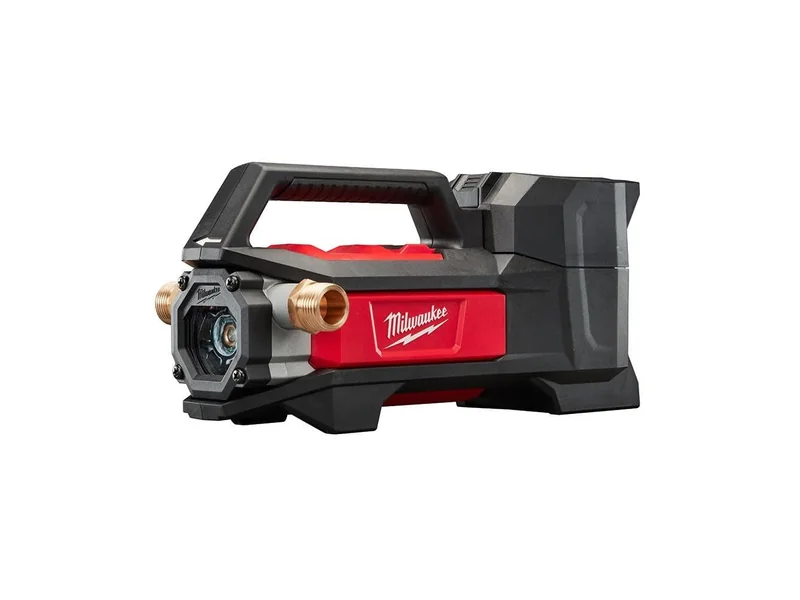
Product reference
Milwaukee 2771-20 M18 Transfer Pump
Best for: Clear-water service for buyers who already own Milwaukee M18 batteries
Trade-off: The manual limits it to clear water and its stated maximum flow trails the DEWALT
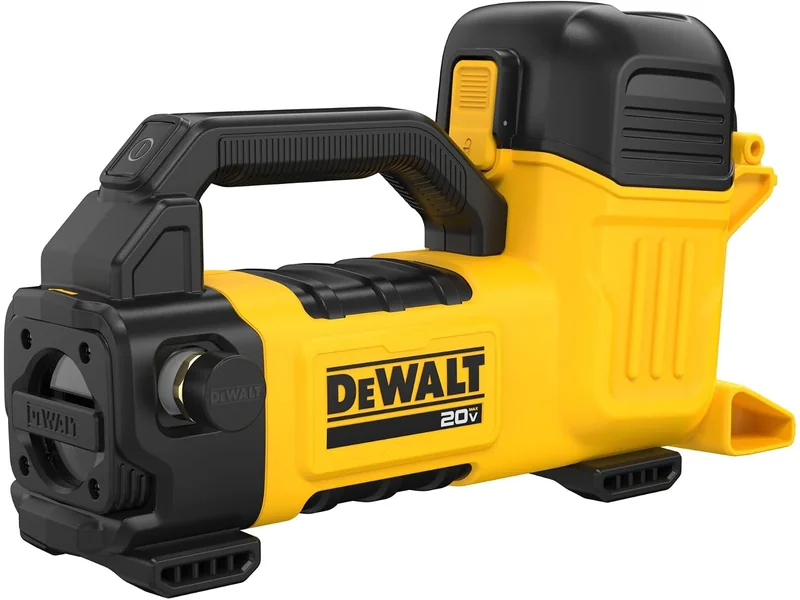
Product reference
DEWALT 20V MAX Transfer Pump DCE050B
Best for: Higher-flow water transfer and approved water-propylene-glycol service
Trade-off: It is larger than the Milwaukee and its manual prohibits flammable liquids
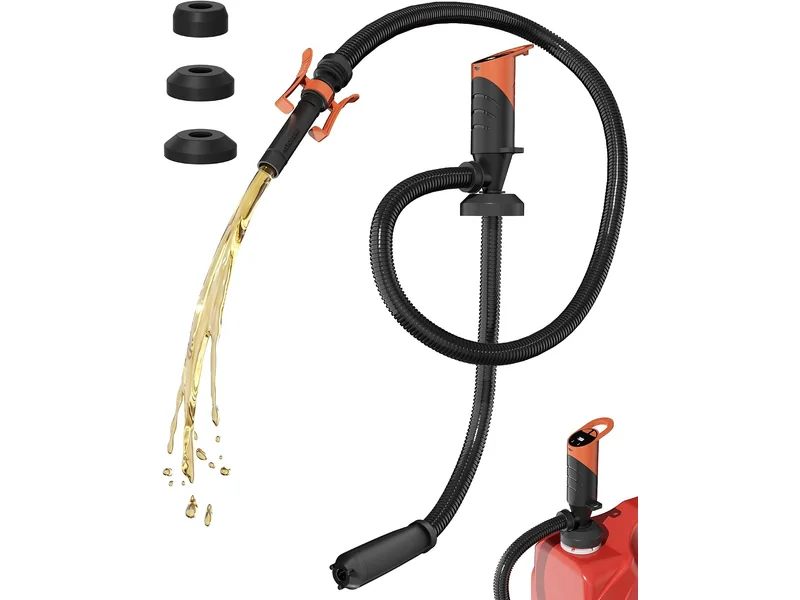
Product reference
Lavendex FP001 Auto-Stop 3.2 GPM Cordless Fuel Transfer Pump
Best for: Occasional gasoline or diesel transfer from compatible portable containers
Trade-off: No manufacturer-hosted manual or independently traceable exact-model safety certification was found
How this guide was researched
We compare documented product features against the job each buyer needs done. We have not physically tested these products. Check current specifications and availability with the manufacturer or merchant.
Affiliate disclosure: If you buy through a qualifying link, we may earn a commission at no extra cost to you.