
Backup and off-grid power • product review
Jackery Explorer 1000 v2 Review: Is It a Good Refrigerator Backup?
Our Jackery Explorer 1000 v2 review examines refrigerator runtime, output, charging, portability, solar limits, and who should buy it.
A refrigerator is a difficult backup load because the compressor starts hard, cycles unpredictably, and consumes more energy in a hot room. The Jackery Explorer 1000 v2 has enough inverter power for many household refrigerators and enough battery for a meaningful outage bridge, but it cannot promise a fixed number of hours for an appliance it has never measured.
Our verdict: the Explorer 1000 v2 is a strong fit for buyers who want roughly 1 kWh of movable power without hauling a large home-backup unit. Its 1,070Wh battery, 1,500W inverter, 23.8-pound weight, and simple controls make it practical for a refrigerator, camping cooler, lights, electronics, and other selected essentials. The compromises are three AC outlets, a 400W solar-input ceiling, no expansion-battery support, and less output than some similarly sized competitors.
Focused Gadgets has not physically tested this power station. This review combines Jackery’s current product documentation and manual with independent measurements from OutdoorGearLab. Manufacturer specifications are identified as such; independent results are attributed rather than presented as our measurements.
Quick verdict
- Best for: a measured refrigerator, portable camping power, or a short list of non-critical outage essentials.
- Main advantage: useful 1 kWh-class capacity in a relatively compact 23.8-pound case.
- Main limitation: the battery is not expandable, so longer outages need a recharging plan or a larger system.
- Choose it over a higher-output rival when: portability, a built-in light, and a straightforward interface matter more than extra outlets or faster charging.
- Skip it when: you need 240V output, whole-home integration, long-duration backup, more than 1,500W continuous AC output, or a zero-interruption UPS.
| Specification | Jackery Explorer 1000 v2 | Why it matters |
|---|---|---|
| Battery | 1,070Wh LiFePO4 | Enough for selected appliances, not an entire home |
| AC output | 1,500W continuous; 3,000W surge | Suits many refrigerators if startup demand remains within limits |
| AC outlets | Three, sharing the 1,500W total | Large plugs can make the limited outlet count more restrictive |
| USB | One 100W USB-C, one 30W USB-C, one 18W USB-A | Can charge a laptop and mobile devices without occupying AC outlets |
| 12V output | One 12V/10A car socket | Useful for compatible coolers and vehicle accessories |
| Weight | About 23.8 lb | Realistically movable by one adult |
| Solar input | Up to 400W through two DC inputs | Adequate for a portable array, modest for repeated off-grid replenishment |
| Standard AC charge | About 1.6 to 1.7 hours claimed | Quick enough to refill during a short grid or generator window |
| UPS transfer | Within 20 ms claimed | Helpful for compatible equipment, but not a zero-interruption UPS |
| Expansion battery | Not supported | Capacity cannot grow with future needs |
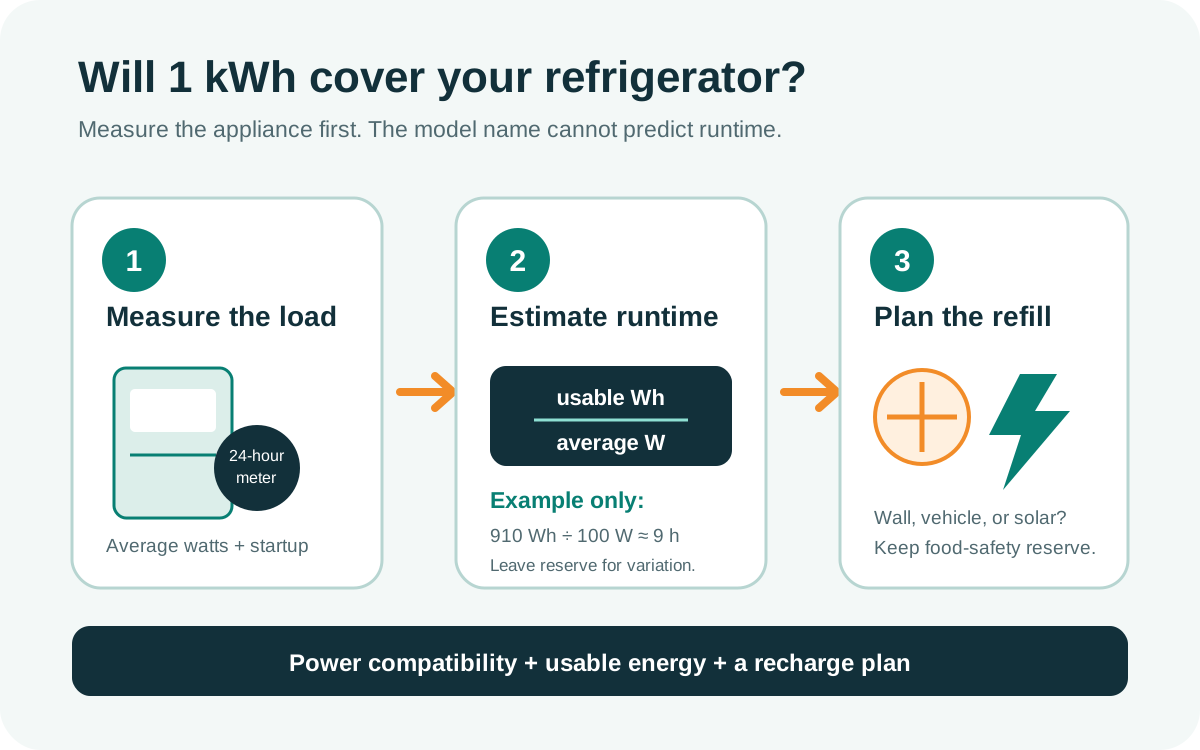
Will the Jackery Explorer 1000 v2 run a refrigerator?
It can run many refrigerators, provided the appliance’s running and startup demands fit the station. Jackery rates the three AC outlets at 1,500W combined and lists a 3,000W surge peak. That gives the station more inverter headroom than the original 1,000W Explorer 1000, but the model name does not guarantee compatibility with every compressor.
There are two separate checks:
- Power check: the refrigerator must start and run without exceeding the inverter’s limits.
- Energy check: the battery must contain enough usable energy for the required time.
The refrigerator’s label may show maximum current or rated wattage, not its average daily consumption. Compressors cycle. Defrost heaters, ice makers, ambient temperature, door openings, ventilation, age, and thermostat settings all change demand. A plug-in energy meter observed over at least 24 hours gives a much more useful baseline than guessing from the door label.
OutdoorGearLab measured 910Wh of AC energy from its test unit, or about 85% of the stated 1,070Wh capacity. That is one independent result, not a guarantee for every unit, load, temperature, or battery age. It is nevertheless a more conservative planning input than treating all 1,070Wh as available at the outlet.
Illustrative refrigerator runtime
The planning formula is simple:
usable watt-hours ÷ average watts = approximate hours
Using 910Wh only as an independent measured example:
| Measured average refrigerator load | Simple estimate | Planning interpretation |
|---|---|---|
| 50W | About 18 hours | Possible for an efficient, lightly used refrigerator in favorable conditions |
| 75W | About 12 hours | A plausible overnight bridge for some appliances |
| 100W | About 9 hours | Useful for a shorter outage, with little room for additional loads |
| 150W | About 6 hours | Shows why a warm room or less efficient refrigerator drains 1 kWh quickly |
These figures are arithmetic examples, not promised runtimes. Reserve capacity for inverter overhead, unexpected cycling, battery protection, and other loads. Test the exact refrigerator and station together before relying on the combination during an outage.
Food safety still needs its own plan. The FDA says an unopened refrigerator generally keeps food cold for about four hours during an outage and recommends using appliance thermometers. A power station can extend cooling, but the display percentage does not tell you whether food remained at a safe temperature. Keep the door closed and monitor the refrigerator itself.
What the 1,500W inverter changes
The 1,500W continuous rating is the Explorer 1000 v2’s most useful upgrade over older 1 kWh Jackery models. It creates room for a refrigerator compressor, coffee maker, compact microwave, power tool, or small cooking appliance that would overwhelm a 300W or 1,000W station.
It does not mean the unit can run all those loads together. The three AC receptacles share one 1,500W budget. A 1,200W cooking appliance leaves little margin for anything else, and a heating load can empty the battery surprisingly fast even when the inverter handles it comfortably.
The outlet layout also deserves attention. Three sockets are adequate for a refrigerator, router, and lamp, but bulky adapters may obstruct neighboring outlets. The 100W USB-C port helps by moving a compatible laptop away from AC, while the 30W USB-C and 18W USB-A ports cover smaller electronics.
Portable enough to move where the outage is
Jackery lists the station at 23.8 pounds and 12.87 by 8.82 by 9.72 inches. OutdoorGearLab measured its unit at 24.4 pounds. Either figure puts it near the manageable end of the 1 kWh class: heavy enough that you will notice a long carry, but compact enough for one adult to move between a kitchen, vehicle, campsite, or storage shelf.
The folding handle matters more than it sounds. A fixed arch wastes packing space above a power station, while a flat top is easier to fit beneath a shelf or among camping bins. The rectangular body is also less awkward than a taller expandable system.
This remains a portable battery, not outdoor electrical equipment. Jackery does not list the station itself as water- or dust-resistant. Keep it dry, ventilated, and within the documented temperature range. A solar panel’s weather rating does not transfer to the power station connected to it.
Charging: quick from a wall, slower from a vehicle
Jackery lists normal AC charging at roughly 1.6 to 1.7 hours. The app can enable a one-hour Emergency Super Charge mode, while a quieter mode reduces fan noise. The fastest setting is useful before a forecast outage or during a brief generator window, but there is little reason to treat emergency mode as the everyday default when normal charging is fast enough.
Independent testing adds useful context. OutdoorGearLab recorded a 1.58-hour full charge and described the rate as slower than several current competitors that finished in under an hour. That result aligns closely with Jackery’s normal-mode claim while showing why the app-enabled one-hour headline should not be mistaken for the ordinary charging experience.
Vehicle charging is a different story. Jackery estimates roughly 12 hours from a standard car outlet, so a short drive will add only part of the battery. A compatible fast car charger can change that equation, but it is an additional system with its own wiring and vehicle constraints.
Is 400W of solar input enough?
For occasional camping, 400W is a sensible portable ceiling. Two 200W-class panels are already large, expensive, and sensitive to shade, orientation, heat, and weather. Jackery estimates about 3.8 hours with two compatible 200W panels under its test assumptions, while one 200W panel is listed at roughly 7.5 hours.
Real solar days are not laboratory conditions. Morning and evening angles, passing clouds, partial shade, cable losses, high panel temperature, and simultaneous loads reduce what reaches the battery. A 400W array may refill the station in a strong day, but it is not a dependable promise of one full recharge every day in every season.
The ceiling becomes restrictive when the station is used daily off-grid or must recover quickly while still running a refrigerator. Competing 1 kWh stations accepting 600W or more provide additional recovery headroom. The Explorer 1000 v2 is better understood as a portable station that can use solar, not the center of a large expandable solar system.
Battery life and storage
The LiFePO4 battery is rated by Jackery for 4,000 cycles until at least 70% of original capacity remains. The percentage matters: cycle claims are not directly comparable when another manufacturer defines end of life at 80%. Even after the threshold, the battery does not abruptly stop working; it stores less energy than it did when new.
Long cycle life does not remove storage maintenance. The manual calls for periodic checks and partial recharging during long storage rather than leaving the unit depleted and forgotten. Store it dry, avoid temperature extremes, and confirm the charge level before storm or camping season.
The battery cannot be expanded. That keeps the system simple, but it makes the original capacity a hard limit. Buyers who may later need several kilowatt-hours should compare expandable stations before committing to this platform.
The 20 ms backup mode is useful, not universal
Jackery documents an automatic switch to battery power within 20 milliseconds when the station is connected between a wall outlet and compatible equipment. That can keep some refrigerators, desktop computers, and electronics operating through a brief interruption.
It is not a zero-millisecond online UPS. Jackery specifically cautions against treating it as uninterrupted power for equipment such as data servers and workstations that require no transfer gap. Compatibility also depends on the connected device. Test the intended load rather than assuming the word “UPS” settles the question.
The bypass path and station still share the documented 1,500W limit. Do not connect a power strip full of appliances simply because grid power is present at the time.
App control is optional until you need a special mode
Basic output controls and the display work without building the entire ownership experience around a phone. The Jackery app adds status monitoring, AC and DC output control, display scheduling, energy-saving settings, quiet charging, and Emergency Super Charge.
That is a reasonable balance for buyers who prefer physical controls. The catch is that the headline one-hour charging mode depends on the app. Anyone avoiding accounts or wireless setup should judge the product by its normal charging behavior, not by an app-only mode they may never enable.
Jackery Explorer 1000 v2 vs. Anker SOLIX C1000 Gen 2
The Explorer is the more portable-looking, simpler choice, with a built-in light and slightly higher stated battery capacity. The Anker SOLIX C1000 Gen 2 offers 2,000W continuous output, five U.S. AC outlets, a 600W solar-input ceiling, and a faster standard charging claim. Neither is expandable.
That makes the decision less about brand and more about the electrical plan. Choose Jackery when lower weight, compact storage, and a modest set of loads matter most. Choose Anker when several AC plugs, higher-wattage appliances, or faster replenishment are worth a slightly larger footprint. Read our Anker SOLIX C1000 Gen 2 review for its measured runtime, charging, and UPS trade-offs, or use our portable power station comparison to compare both with the much smaller Jackery Explorer 300.
What about camping and 12V refrigerators?
The 12V/10A car-style output can power compatible portable refrigerators without converting battery DC to household AC and back again. That may reduce conversion loss, but compatibility comes first: check the refrigerator’s voltage range, plug, startup behavior, low-voltage protection, and maximum demand.
A 1 kWh station is a substantial companion for a compact fridge, yet hot weather and frequent lid openings still matter. A shaded, pre-cooled refrigerator uses less energy than one asked to chill warm groceries in a hot vehicle. See our 12V refrigerator guide for the appliance side of the pairing.
Who should buy it?
Consider the Jackery Explorer 1000 v2 if you have measured a refrigerator or camping load, want a unit one person can move, and expect to recharge from a wall, vehicle, or modest portable solar array. It is especially sensible when the backup plan is deliberately narrow: refrigerator first, then communications, lights, and small electronics.
It also suits occasional camping and road-trip use where a 300Wh station feels too limiting but a 2 kWh system is too heavy. The built-in light, USB-C laptop output, flat-folding handle, and simple local controls are practical rather than ornamental features.
Who should skip it?
Choose something else if you need a whole-home battery, 240V appliances, central air conditioning, multiple high-draw devices, or several days of backup without recharging. The same applies if expansion batteries are part of the future plan.
Buyers building around frequent solar use should compare higher solar-input limits. People needing many AC connections should count plugs and adapter widths before purchase. For medical equipment or another safety-critical load, follow the device manufacturer’s power guidance and establish an approved backup plan rather than relying only on a consumer power station’s capacity or transfer-time claim.
Frequently asked questions
How long will a Jackery Explorer 1000 v2 run a refrigerator?
There is no honest universal runtime. Measure the refrigerator’s average watt-hours, confirm compressor startup compatibility, and divide realistic usable station energy by the average load. One independent test measured 910Wh of AC output; that would theoretically support a 100W average load for about nine hours before additional reserve.
Can it run a full-size refrigerator?
Many full-size refrigerators fall within the 1,500W continuous and 3,000W surge ratings, but model-specific startup behavior varies. Test the exact appliance and keep an appliance thermometer inside the refrigerator.
Can the battery capacity be expanded?
No. Jackery’s current documentation says the Explorer 1000 v2 does not support an expansion battery.
Does it charge to full in one hour?
Jackery claims a one-hour Emergency Super Charge through an app-enabled mode. Normal AC charging is listed at about 1.6 to 1.7 hours, which is also close to the independent result cited in this review.
Is it waterproof?
No documented water- or dust-resistance rating applies to the power station. Keep it protected from rain, condensation, spills, and wet ground.
Final verdict
The Jackery Explorer 1000 v2 makes the most sense as a movable outage bridge, not a miniature whole-home battery. It packages 1,070Wh, a 1,500W inverter, useful USB and 12V outputs, and long-life LiFePO4 chemistry into a station that one adult can reasonably carry.
Its limits are equally clear. Three AC outlets, 400W solar input, no expansion path, and a 20 ms rather than zero-interruption transfer keep it behind stronger systems for complex backup plans. For a measured refrigerator, a camping cooler, and a disciplined list of essentials, though, it is a convincing balance of capacity and portability.
Models discussed
Use these as starting points for checking fit. We do not publish a price or claim hands-on testing.
| Model | Format | Best fit | Trade-off |
|---|---|---|---|
| Jackery Explorer 1000 v2 | 1,070Wh lithium iron phosphate portable power station | Measured refrigerators and movable non-critical outage essentials | Lower continuous output and solar-input ceiling than the Anker; not recommended by Jackery for medical-device use |
| Anker SOLIX C1000 Gen 2 | 1,024Wh lithium iron phosphate portable power station | Higher-output outage essentials and rapid grid or solar recharging | Slightly less rated energy than the Jackery 1000 v2 and no expansion-battery path |
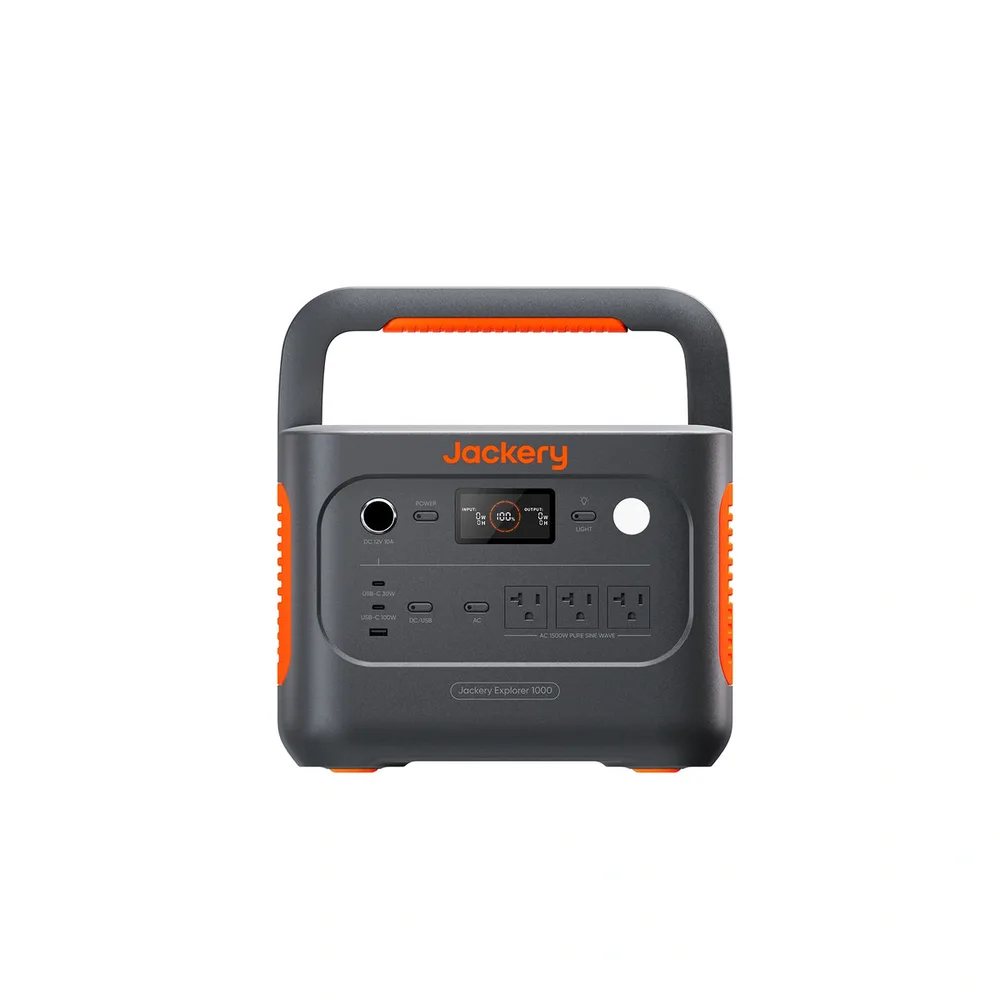
Product reference
Jackery Explorer 1000 v2
Best for: Measured refrigerators and movable non-critical outage essentials
Trade-off: Lower continuous output and solar-input ceiling than the Anker; not recommended by Jackery for medical-device use
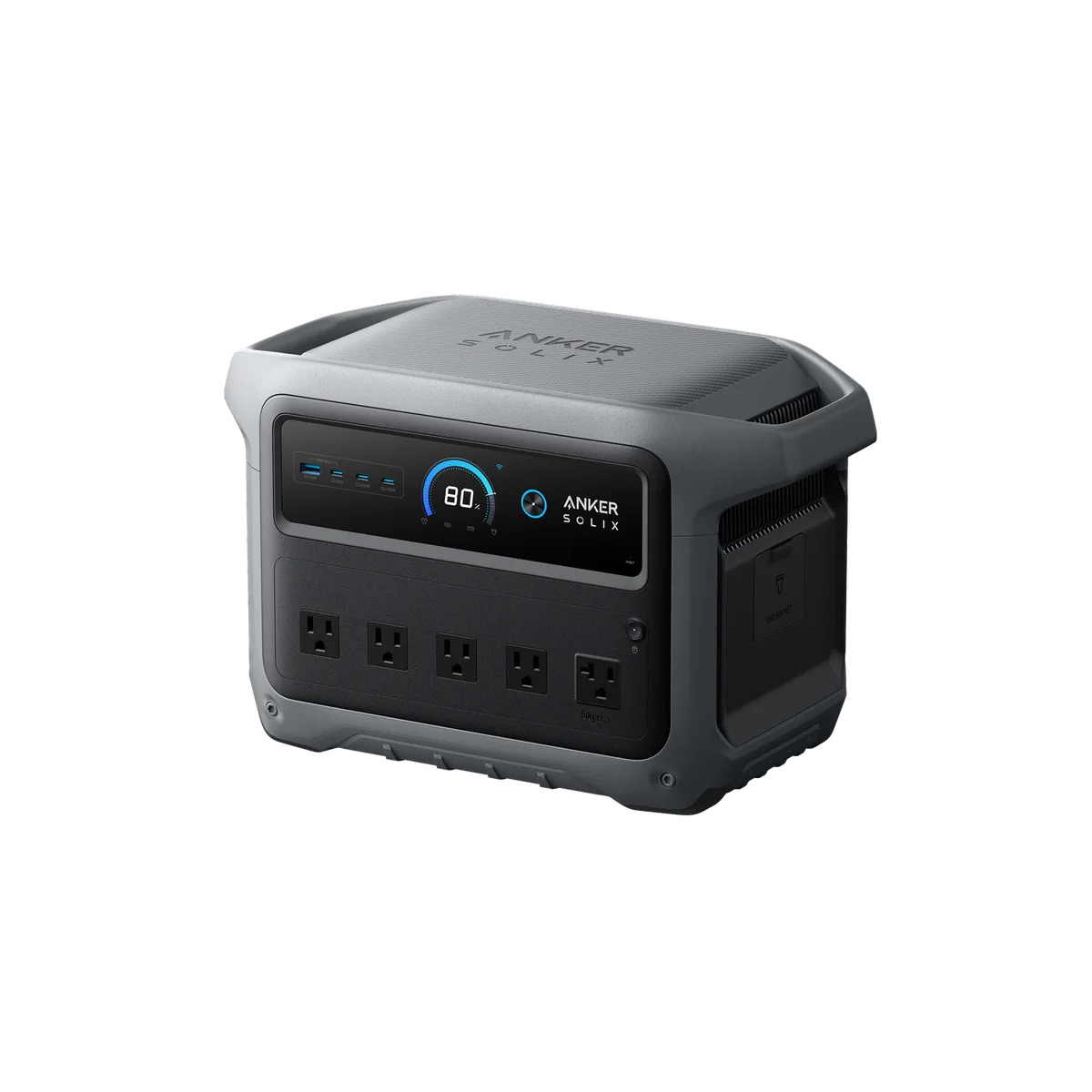
Product reference
Anker SOLIX C1000 Gen 2
Best for: Higher-output outage essentials and rapid grid or solar recharging
Trade-off: Slightly less rated energy than the Jackery 1000 v2 and no expansion-battery path
How this guide was researched
We compare documented product features against the job each buyer needs done. We have not physically tested these products. Check current specifications and availability with the manufacturer or merchant.
Affiliate disclosure: If you buy through a qualifying link, we may earn a commission at no extra cost to you.