
Backup and off-grid power • product review
Anker SOLIX C1000 Gen 2 Review: Fast, Powerful Home Backup
Our Anker SOLIX C1000 Gen 2 review covers real runtime, 49-minute charging, UPS limits, solar input, noise, and the best alternatives.
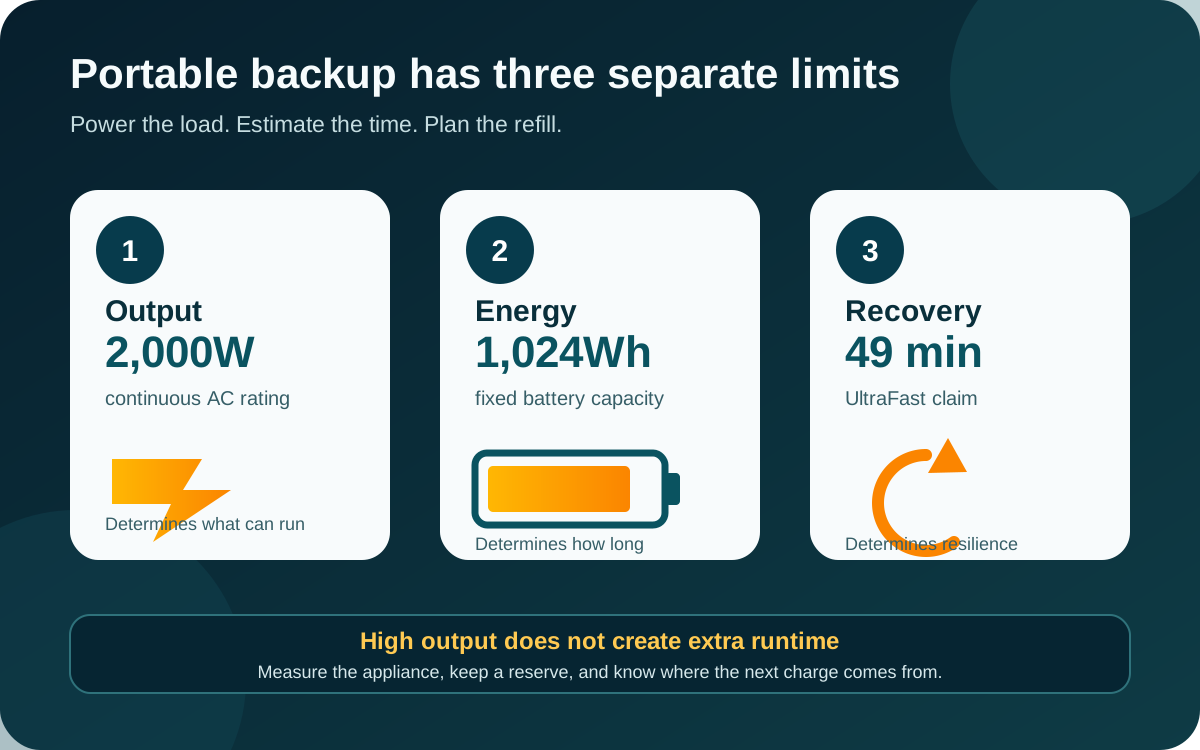
A portable power station can have enough output to start a refrigerator and still run out of energy before morning. That distinction is the key to understanding the Anker SOLIX C1000 Gen 2: its 2,000W inverter is unusually capable for a 1 kWh unit, while its fixed 1,024Wh battery remains a short-term backup resource.
Our verdict: the C1000 Gen 2 is an excellent fit for buyers who want high AC output, several usable outlets, and a very fast wall recharge in a station one person can still move. It is less convincing for multi-day outages because the battery cannot be expanded. Its 600W solar input helps, but sunlight is not a guaranteed daily refill.
Focused Gadgets has not physically tested this power station. This review combines Anker’s current U.S. product documentation and user guide with independently measured energy, charging, weight, and noise observations from OutdoorGearLab. Manufacturer claims and independent findings are identified separately.
Quick verdict
- Best for: selected home-backup loads, high-draw appliances used one at a time, rapid grid or generator recharging, and portable solar setups up to 600W.
- Main advantage: 2,000W continuous output and a standard wall recharge claimed at 49 minutes in UltraFast mode.
- Main limitation: the 1,024Wh battery is not expandable.
- Choose it over the Jackery Explorer 1000 v2 when: higher output, more AC outlets, faster charging, and a higher solar-input ceiling matter most.
- Skip it when: you need several kilowatt-hours of storage, 240V output, whole-home integration, silent fast charging, a built-in work light, or guaranteed uninterrupted power for critical equipment.
| Specification | Anker SOLIX C1000 Gen 2 | Why it matters |
|---|---|---|
| Battery | 1,024Wh LiFePO4 | A useful short-outage reserve, but not multi-day whole-home capacity |
| AC output | 2,000W continuous; 3,000W peak | Handles more demanding single appliances than many 1 kWh competitors |
| AC outlets | Five U.S. outlets | Better plug access than three-outlet designs; all share one output limit |
| Total ports | Ten | Covers AC, USB, and 12V devices without relying on a separate hub |
| USB-C maximum | Up to 140W from the high-power USB-C port | Can charge many compatible laptops directly |
| 12V output | 12V/10A, 120W car socket | Useful for compatible coolers and vehicle accessories |
| AC charging | 49 minutes claimed in app-enabled UltraFast mode | Valuable during a brief grid or generator window |
| Solar input | Up to 600W | More recovery headroom than 400W-class competitors |
| UPS transfer | 10 ms claimed | Useful for compatible devices, but not a zero-transfer online UPS |
| Weight | 24.9 lb claimed | Portable by one adult, though not something most people will carry far |
| Expansion battery | Not supported | The original capacity is a permanent ceiling |
What the 2,000W rating does - and does not - tell you
Anker rates the C1000 Gen 2 for 2,000W of continuous AC output and a 3,000W peak. That is enough inverter headroom for many refrigerators, microwaves, coffee makers, compact cooking appliances, and corded tools, provided the connected loads stay within the station’s limits.
The rating answers whether the station can deliver power at a given moment. It does not answer how long the battery will last. A 1,500W heater may run comfortably from a 2,000W inverter but can consume most of the available energy in well under an hour. A 70W average refrigerator load could run for much longer because its compressor cycles.
The five AC outlets are useful only within the shared 2,000W budget. They make it easier to connect a refrigerator, router, lamp, and chargers, but they do not turn one inverter into five independent circuits. Count startup surges, avoid daisy-chained power strips, and leave a reasonable margin instead of planning at the label maximum.
Be careful with SurgePad claims
Anker also promotes a SurgePad mode for some loads up to 2,400W. The user guide says this feature is intended for resistive or heating equipment and warns against using it with motor-driven appliances such as refrigerators or air conditioners. It is not an invitation to ignore the normal 2,000W output rating.
If an appliance has a compressor, pump, or other motor, judge it against the standard output and peak specifications and test the exact combination. A feature that reduces voltage to keep a simple heater running is not equivalent to supplying full rated power to every 2,400W appliance.
How long will the Anker C1000 Gen 2 run a refrigerator?
There is no responsible universal runtime. Refrigerator consumption changes with room temperature, door openings, age, ventilation, defrost cycles, ice-making, thermostat settings, and how much warm food is added. Startup demand also differs from average consumption.
OutdoorGearLab measured 890Wh of usable AC energy from its test unit, about 87% of the stated 1,024Wh capacity. That single independent result is a useful planning reference, not a promise for every unit or condition.
The basic estimate is:
usable watt-hours / measured average watts = approximate runtime hours
Using 890Wh only as an illustrative starting point:
| Measured average load | Simple estimate | Practical reading |
|---|---|---|
| 50W | About 17.8 hours | Possible for an efficient, lightly used refrigerator in favorable conditions |
| 75W | About 11.9 hours | A plausible overnight bridge for some appliances |
| 100W | About 8.9 hours | Useful for a shorter outage with little energy allocated elsewhere |
| 150W | About 5.9 hours | Shows how quickly a warm room or inefficient appliance changes the plan |
These are arithmetic examples, not guaranteed runtimes. Measure the refrigerator at the wall for at least 24 hours, confirm that the compressor starts successfully, and retain a reserve for conversion losses, unexpected cycling, and battery protection.
Food safety needs a separate check. The FDA says an unopened refrigerator generally keeps food cold for about four hours during an outage and recommends appliance thermometers. Powering the refrigerator may extend that window, but a battery percentage does not prove that food stayed at a safe temperature.
The 49-minute recharge is genuinely useful - with conditions
Anker says UltraFast charging can refill the station in 49 minutes at up to 1,600W. OutdoorGearLab measured a 56-minute full charge in its test, which is still very quick for this capacity class. Fast recovery matters during a rolling outage, a short generator run, or a limited period when grid power returns.
There are important qualifications. The manual says UltraFast charging must be enabled in the Anker app and requires a battery temperature above 20 degrees Celsius. It also advises using the mode only when necessary. The standard AC input is rated at up to 1,200W, so buyers who avoid the app should not assume they will always receive the headline charging behavior.
High-rate charging and heavy output also produce fan noise. OutdoorGearLab specifically noted that the fan became loud near maximum load and during fast charging. That may be irrelevant in a garage during an outage, but it matters beside a bed, desk, or campsite.
The practical advantage is not merely that the battery fills quickly. It is that a 1 kWh station can be replenished during short energy windows. The trade-off is that the battery still stores only about 1 kWh when charging ends.
Is 600W of solar input enough?
The C1000 Gen 2 accepts up to 600W of solar input. Anker claims a full recharge in about 1.8 hours under its ideal test conditions. The higher ceiling is a meaningful advantage over 400W-class alternatives, especially if the station is powering a refrigerator while the panels are producing.
Real solar output varies with season, latitude, cloud, shade, panel temperature, orientation, cable loss, and the battery’s state of charge. A nominal 600W array will rarely sit at exactly 600W for an entire charge. Panels also require substantial space and careful placement to avoid partial shade.
The manual permits simultaneous grid and solar input and says solar is prioritized. That can help recover quickly when both sources are available. It does not make the station an expandable home energy system. Buyers expecting repeated off-grid use should estimate their daily load against conservative local solar production, not the best-case 1.8-hour claim.
The 10 ms UPS mode has limits
Anker states that all AC outlets can switch to battery power within 10 milliseconds when the station is placed between a wall outlet and compatible equipment. That can bridge many brief outages for a router, refrigerator, desktop computer, or other tolerant device.
Ten milliseconds is not zero milliseconds. The C1000 Gen 2 is not an online, double-conversion UPS, and compatibility depends on the connected device’s power supply. Test the complete setup before relying on it. For medical equipment, servers, or any safety-critical load, follow the equipment manufacturer’s approved backup-power guidance rather than treating a consumer power station as a universal solution.
Pass-through use also does not remove the station’s output limits. The manual documents a 1,200W bypass limit when grid power is present. Do not assume that wall power makes all five receptacles a substitute for a household branch circuit.
Portability is good for the output class
Anker lists the station at 24.9 pounds and 15.12 by 8.19 by 9.61 inches. OutdoorGearLab measured 25.2 pounds. One adult can reasonably move it between a storage shelf, kitchen, vehicle, workshop, or campsite, though the weight becomes noticeable over distance.
The body is compact relative to its 2,000W output, and the recessed handle keeps the top usable for temporary storage. The front panel gives clear access to the outlets and display. The station has no built-in light, so a separate rechargeable lantern belongs in an outage kit.
The C1000 Gen 2 is not waterproof. Keep it dry, ventilated, and away from wet ground, rain, condensation, and enclosed spaces where heat cannot escape. A weather-resistant solar panel does not make the connected power station weather-resistant.
App features and battery care
The Anker app enables UltraFast charging and provides monitoring and operating controls. The platform also supports settings intended to shift charging around electricity rates. Buyers interested in time-of-use operation should confirm that their utility tariff and household routine make the feature worthwhile; the app cannot create savings when rates do not vary.
Anker uses lithium iron phosphate cells and claims 4,000 cycles before capacity falls to at least 80%. That is a manufacturer longevity claim under defined conditions, not a warranty that every battery will deliver identical capacity for a particular number of years.
The manual recommends storing the unit in a cool, dry place and recharging it to 100% every three months during storage. Long-life chemistry still needs basic maintenance. An emergency battery left empty for a year is not a dependable emergency plan.
Understanding the fixed-capacity design
The C1000 Gen 2 does not support an expansion battery. This is the decisive drawback for buyers whose backup needs may grow. The 2,000W inverter can run demanding appliances, but the fixed 1,024Wh battery determines how long it can do so.
That combination can be misleading. High output makes more appliances compatible, while the compact energy reserve encourages careful scheduling. A microwave may be sensible for a few minutes; an electric heater is usually a poor use of limited stored energy. Running a refrigerator, router, lights, and laptop can be reasonable, but adding cooking and heating loads dramatically reduces runtime.
Choose an expandable system if you expect to add several kilowatt-hours later, want multi-day autonomy, or plan to make a portable station part of a larger home-backup setup. Choose the C1000 Gen 2 when one fixed, fast-recharging battery matches a defined list of loads.
Anker SOLIX C1000 Gen 2 vs. Jackery Explorer 1000 v2
The Anker is the stronger choice for higher-wattage appliances and faster replenishment. It provides 2,000W continuous output, five U.S. AC outlets, up to 600W solar input, and a 49-minute UltraFast claim. The Jackery provides 1,500W continuous output, three AC outlets, up to 400W solar input, and a slower normal wall charge.
The Jackery counters with a slightly larger stated 1,070Wh battery, a lower claimed weight of 23.8 pounds, a built-in light, and a straightforward physical design. Neither model accepts an expansion battery.
For a refrigerator and basic electronics, either may work after measuring the load. Pick Anker when output, plug access, and recharge speed are priorities. Pick Jackery when the built-in light, marginally lower weight, and simpler outage-kit role are more attractive. Our Jackery Explorer 1000 v2 review examines its refrigerator runtime in detail, while our portable power station guide puts both products in the broader category.
Who should buy it?
Buy the C1000 Gen 2 if you have a measured set of essential loads, want more inverter headroom than a typical 1 kWh station, and have a realistic way to recharge. It is especially compelling when power may return briefly or a generator can run for a short period, because rapid charging turns those windows into useful stored energy.
It also makes sense for vehicle-supported camping, mobile work, and a compatible 12V refrigerator. Direct 12V output can avoid converting battery power to AC and back, though the appliance’s plug, voltage range, startup behavior, and maximum draw still need verification. Our 12V refrigerator guide covers that side of the pairing.
Who should skip it?
Skip it if you need whole-home backup, 240V appliances, central air conditioning, several days of autonomy without recharging, or an expansion path. Buyers who sleep near the station should also consider the reported fan noise during fast charging and heavy loads.
Choose a dedicated UPS for equipment that cannot tolerate any transfer interval. For medical devices, confirm compatibility and backup requirements with the device manufacturer. If weather exposure is unavoidable, use equipment specifically rated for that environment rather than placing this station outdoors.
Frequently asked questions
How long does the Anker SOLIX C1000 Gen 2 last during an outage?
Runtime depends on the connected load. One independent test measured 890Wh of usable AC energy. As a simple example, 890Wh divided by a 100W average load is about 8.9 hours before adding a safety reserve. Measure the actual appliance rather than relying on a generic runtime chart.
Can it run a full-size refrigerator?
Many refrigerators fit within the 2,000W continuous and 3,000W peak ratings, but compressor startup behavior varies. Confirm the appliance’s demand and test the exact pairing before an outage.
Does it really recharge in 49 minutes?
Anker claims 49 minutes in app-enabled UltraFast mode at a suitable battery temperature. OutdoorGearLab measured 56 minutes. Standard charging and real conditions may take longer.
Can I add an expansion battery later?
No. The current user guide says expansion batteries are not supported.
Is it waterproof?
No. The user guide states that the power station is not waterproof. Keep it dry and adequately ventilated.
Can it work as a UPS?
It has a claimed 10 ms transfer mode for compatible equipment, but it is not a zero-transfer online UPS. Test non-critical loads and use equipment-specific guidance for critical devices.
Final verdict
The Anker SOLIX C1000 Gen 2 combines unusually high output, five AC outlets, fast wall charging, and a 600W solar ceiling in a genuinely movable package. Those strengths make it one of the more practical 1 kWh stations for selected outage loads and short recharge windows.
Its limit is equally important: 2,000W describes what it can power, not how long it can power it, and the 1,024Wh battery cannot be expanded. Buyers who understand that boundary get a capable, fast-recovering backup tool. Buyers expecting a miniature whole-home battery should choose a larger, expandable system.
Models discussed
Use these as starting points for checking fit. We do not publish a price or claim hands-on testing.
| Model | Format | Best fit | Trade-off |
|---|---|---|---|
| Anker SOLIX C1000 Gen 2 | 1,024Wh lithium iron phosphate portable power station | Higher-output outage essentials and rapid grid or solar recharging | Slightly less rated energy than the Jackery 1000 v2 and no expansion-battery path |
| Jackery Explorer 1000 v2 | 1,070Wh lithium iron phosphate portable power station | Measured refrigerators and movable non-critical outage essentials | Lower continuous output and solar-input ceiling than the Anker; not recommended by Jackery for medical-device use |
Product reference
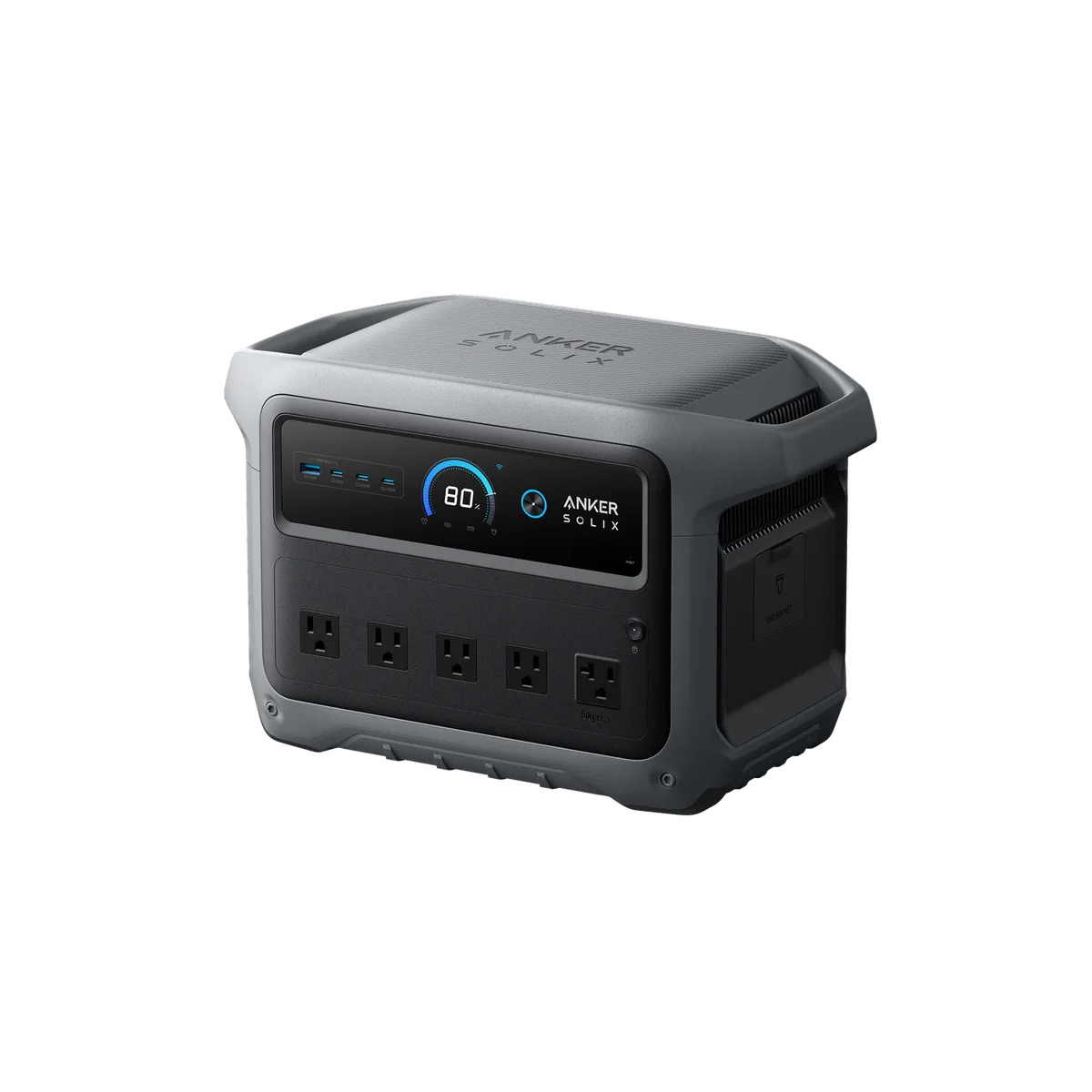
Anker SOLIX C1000 Gen 2
Best for: Higher-output outage essentials and rapid grid or solar recharging
Trade-off: Slightly less rated energy than the Jackery 1000 v2 and no expansion-battery path
Product reference
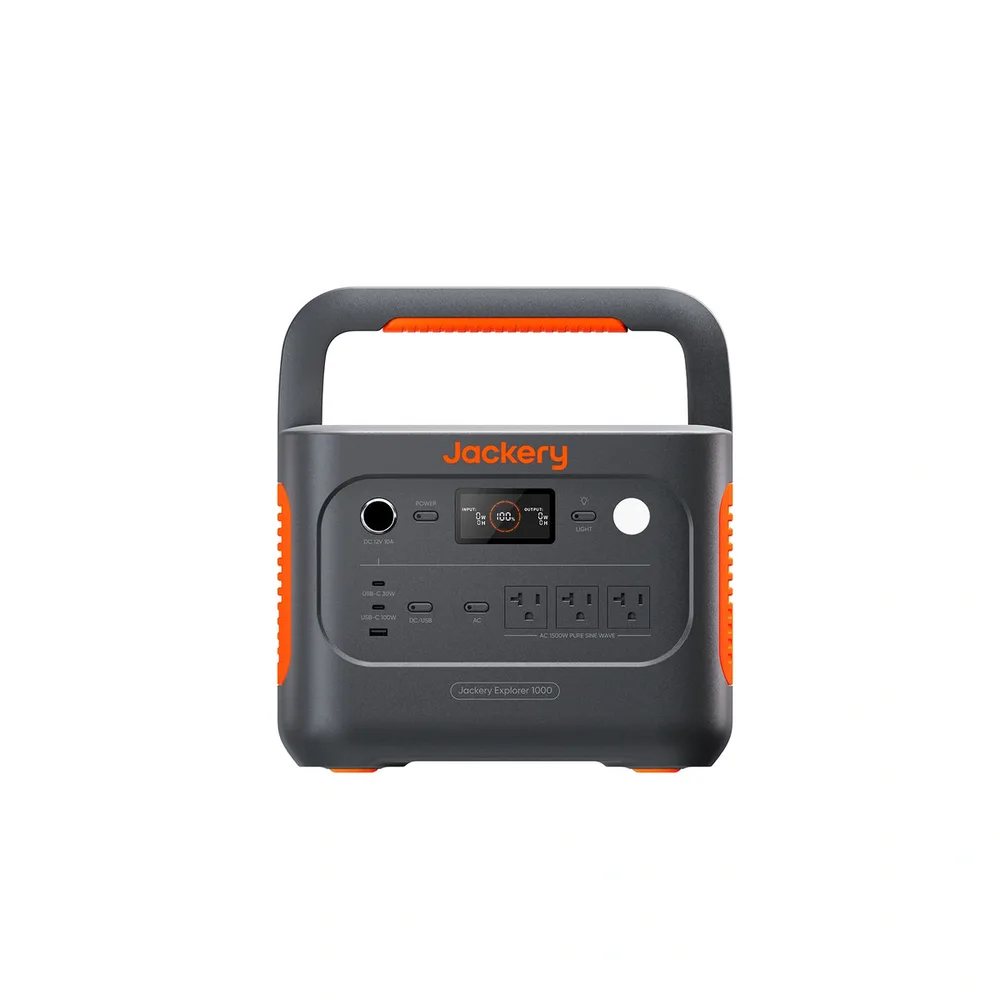
Jackery Explorer 1000 v2
Best for: Measured refrigerators and movable non-critical outage essentials
Trade-off: Lower continuous output and solar-input ceiling than the Anker; not recommended by Jackery for medical-device use
How this guide was researched
We compare documented product features against the job each buyer needs done. We have not physically tested these products. Check current specifications and availability with the manufacturer or merchant.
Affiliate disclosure: If you buy through a qualifying link, we may earn a commission at no extra cost to you.